Chinatown Bangkok: a Yaowarat guide
Updated 6 November 2026
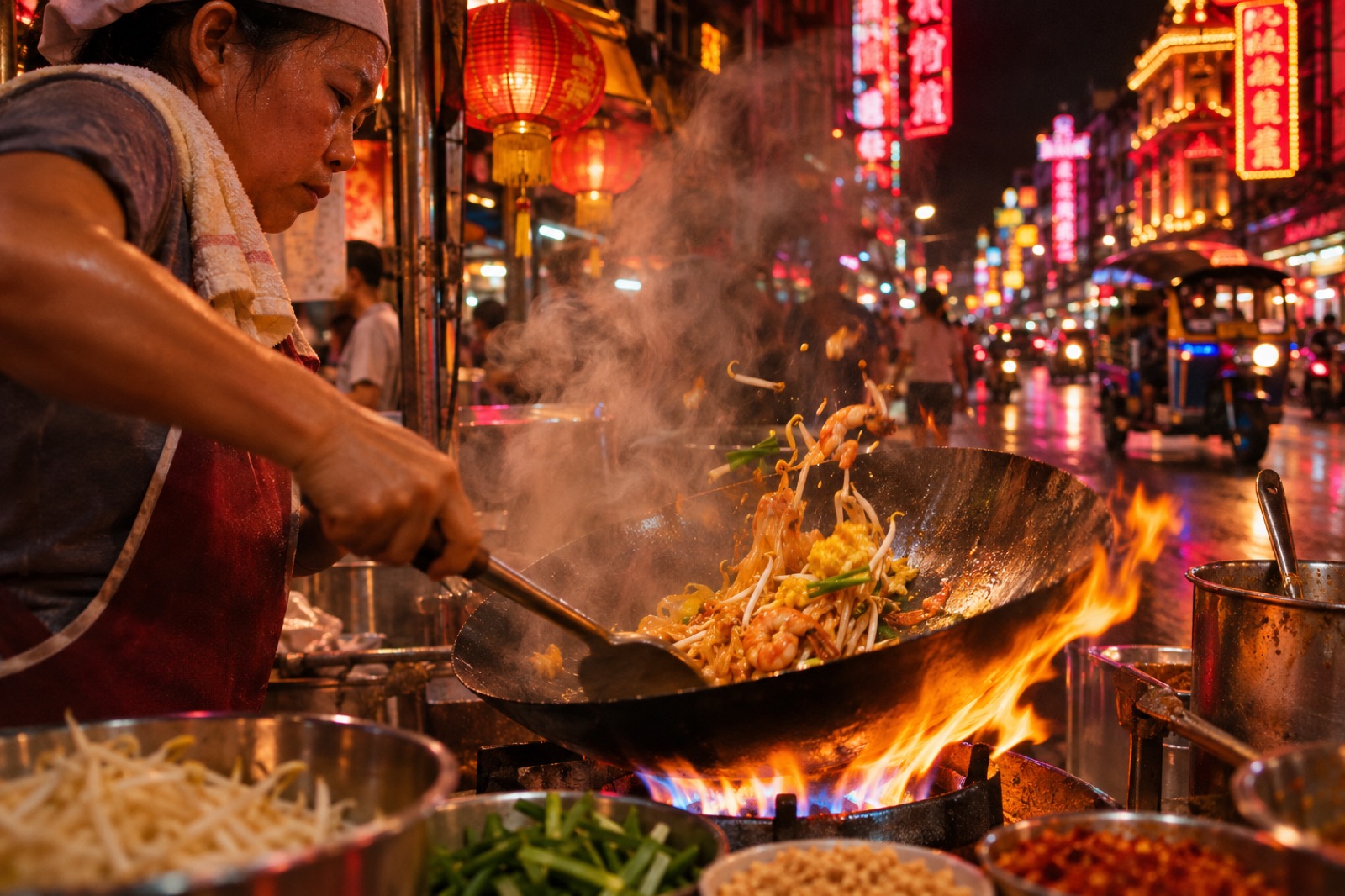
Image created with AI, not a specific venue.
Go to Chinatown in the late afternoon, see a temple while it is light, then eat your way along Yaowarat Road after dark. Take the MRT Blue Line to Wat Mangkon, not a taxi, because the traffic here is slow and the station is right in the district.
Yaowarat is Chinatown’s main road, and it is the reason most visitors come. The Tourism Authority of Thailand points to it for evening street food, including dim sum, noodles and omelettes, and lists it among the Bangkok food streets that stay lively well into the night.
How to get there
The MRT Blue Line is the easy answer. The stations run in this order from Hua Lamphong:
- Hua Lamphong: a short walk from Chinatown and a few minutes from Wat Traimit. Start here if you want the Golden Buddha first.
- Wat Mangkon: in the heart of Chinatown, near the temple of the same name and Sampheng Lane. Use this one for Yaowarat Road.
- Sam Yot and Sanam Chai: the next two stops, for the Old City, Wat Pho and the Grand Palace.
The Blue Line connects with the BTS at Si Lom and Sukhumvit, so this works from both Silom and Sukhumvit. See getting around Bangkok for tickets.
What to see by day
Wat Traimit. The temple houses a massive seated gold Buddha, in a hall whose lower floors act as museums. One covers the statue’s casting, its concealment under plaster and its rediscovery in 1955. Another, the Yaowarat Chinatown Heritage Center, covers the district’s Chinese immigrants. We could not confirm the current fee and hours from an official source, so check before you go.
Wat Mangkon Kamalawat. The Dragon Lotus Temple is the city’s largest Chinese Buddhist temple and has Buddhist, Taoist and Confucian shrines. It is the focus during Chinese New Year and the Vegetarian Festival, so expect crowds on those dates.
Sampheng Lane. A narrow, crowded market selling jewellery, shoes, toys, fabric and food. It is worth a short walk for the atmosphere, not for luxury shopping.
Chinatown Gate. Built in 1999 to mark King Rama IX’s 72nd birthday, it stands near Wat Traimit. A quick photo stop on the way to Yaowarat.
Pak Khlong Talat. The flower market is a short walk from Sanam Chai station, two stops beyond Wat Mangkon. It is at its liveliest after midnight and before dawn, so treat it as a separate outing.
Where to eat after dark
Treat this as a walk with several small stops, not one dinner. Michelin has highlighted these stalls and restaurants in the area. The articles date from 2019 and 2020, so check the current guide and hours first.
| Place | Known for | Where |
|---|---|---|
| Guay Jub Ouan Pochana | Peppery rice noodle soup with pork | 408 Yaowarat Road |
| Woeng Nakhon Kasem (Khao Phad Pu Chang Phueak) | Crab fried rice | 140 Yaowarat Road |
| Lim Lao Ngow | Fishball egg noodles | In front of 299-301 Song Sawat Road |
| Nai Ek Roll Noodles | Rolled noodle soup with crispy pork | 442 Soi Yaowarat 9 |
| Pa Tong Go Savoey | Fried dough with pandan custard | 489 Song Sawat Road, evenings except Monday |
Michelin gave Guay Jub Ouan Pochana, Woeng Nakhon Kasem and Lim Lao Ngow Bib Gourmand status in its 2020 article. Our street food guide adds more names, prices and how to order.
For a proper dinner. Potong, at 422 Vanich 1 Road in the same district, holds one Michelin star for innovative Thai-Chinese cooking. Book it ahead and do the street food on another night, or before a late table. Our Michelin guide covers the other stars in the city.
When to go
Late afternoon into evening. Arrive by mid-afternoon, see Wat Traimit or Wat Mangkon, walk the lanes, then eat once the stalls are running after dark. Do the temples first, because they will not keep street-food hours.
During the festivals. Chinese New Year and the Vegetarian Festival bring decorations and big crowds around Wat Mangkon Kamalawat. They are worth seeing if you like the energy and easy to avoid if you do not. Dates move each year, so check the calendar. Our guide to the best time to visit Bangkok covers the seasons.
Is it worth it
Yes, for the food. It gives you a different side of the city from the malls of Sukhumvit, and it fits easily into a day, as in our 3-day itinerary. Expect heat, crowds and street-side seating rather than comfort. If you want a proper seated dinner in the district, Potong is the better choice.
Staying nearby
Our hotel shortlist has no hotel in Chinatown itself. Most travellers with money do better staying elsewhere and arriving by MRT. See where to stay in Bangkok. If you want a drink afterwards, the nightlife guide and night markets guide are good next stops.
Questions people ask
How do I get to Chinatown in Bangkok?
Take the MRT Blue Line to Wat Mangkon, which puts you in the heart of the district. Hua Lamphong, one stop earlier, is better if you want to start at Wat Traimit.
What is the best time to visit Chinatown Bangkok?
Arrive in the late afternoon. See the temples and lanes while it is light, then stay for Yaowarat Road's street food in the evening.
Is Bangkok's Chinatown worth visiting?
Yes, mainly for the food. Come hungry and in the evening. If you do not care about street food, one temple and an hour in the lanes is enough.
Is there a night market in Chinatown Bangkok?
Not a market in the usual sense. Yaowarat Road is a street of food stalls after dark. For shopping at night, see our guide to Bangkok's night markets.
What should I eat in Chinatown Bangkok?
Peppery rice noodle soup at Guay Jub Ouan Pochana, crab fried rice at Woeng Nakhon Kasem and fishball noodles at Lim Lao Ngow. All three have been Michelin Bib Gourmand picks.
- Tourism Authority of Thailand: MRT Blue Line, the Old City and Yaowarat (2024)
- Tourism Authority of Thailand: Thailand after dark (2025)
- MICHELIN Guide: five street food stalls in Yaowarat (2019)
- MICHELIN Guide: Chinese food in Chinatown and Phra Nakhon (2020)
- MICHELIN Guide: Potong
- Wikipedia: Wat Traimit